









The group is working currently on very diverse organisms, including not only insect species but also other organisms, like plants and spiders with which they interact closely. In most cases, our research is motivated, at least in part, by our curiosity and our interest in natural history of organisms. This page reflects this interest.
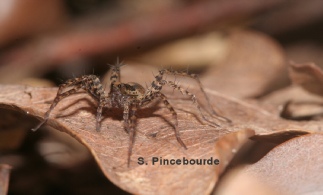
Wolf spider (Pardosa sp)
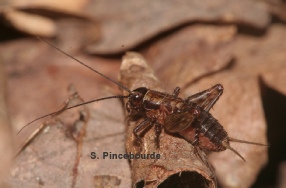
Wood cricket (Nemobius sylvestris)
A windblown hair cricket ...
If one walks in the woods around Tours in spring and summer, one sees plenty of wood
crickets and wolf spiders. They both live in the leaf litter. Spiders exert a huge
selection pressure on its prey. Crickets show exceptional abilities in escaping to
predator attacks through the use of air-
The (complete) story of an intimate relationship...
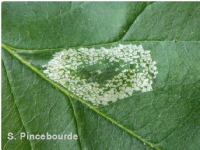
The apple leafminer is developing within leaf tissues inside a mine. This species
has been studied for a while in our group and we have now an understanding of different
facets of its ecology: population ecology (density dependence effects and parasitism),
sensory ecology (vibratory signals involved in the prey -
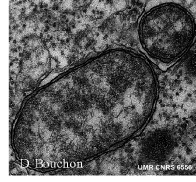
Wolbachia
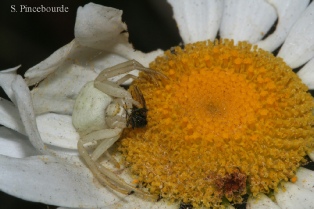
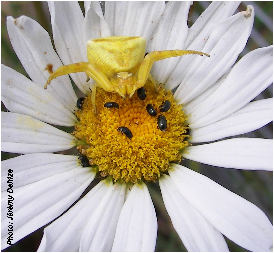
Now you see me, and now you don’t...
Among the organisms we study, the spider crab is probably the ‘sexiest’: both its
crab-
This wood cricket also allows us to establish a bridge between century old natural history and futuristic bionics.
Thomisus onustus
Misumena vatia
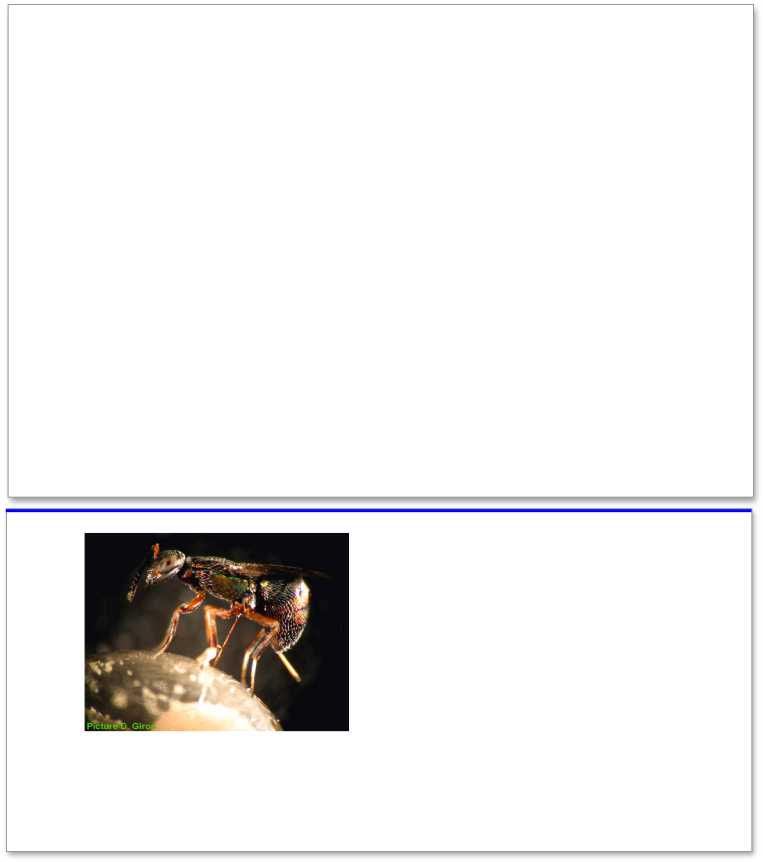
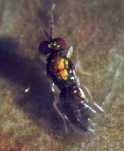
Eupelmus vuiletti on the scene
Some do not make waves, others do...
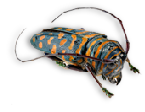
Whirligig beetles are amazing creatures and strong contenders for the first ‘sexiest’
place. They are living at the air-
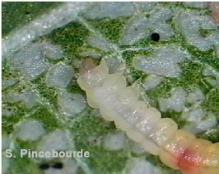
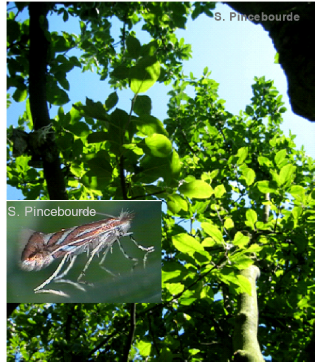
Spotted tentiform leafminer (Phyllonorycter blancardella)
JP. Kopelke
J. Freise
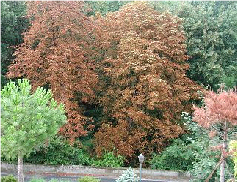
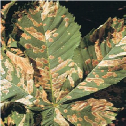
An invader betrayed by its unattractive
effects...
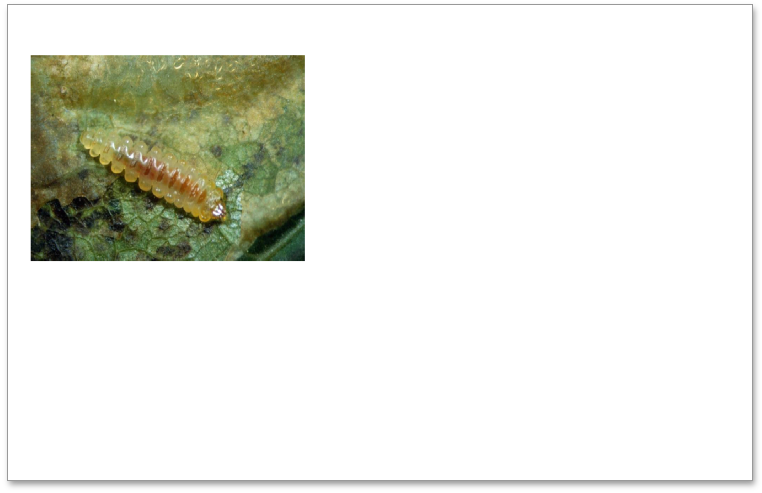
The leafminer Cameraria ohridella is a micro-
Cameraria ohridella, the larva
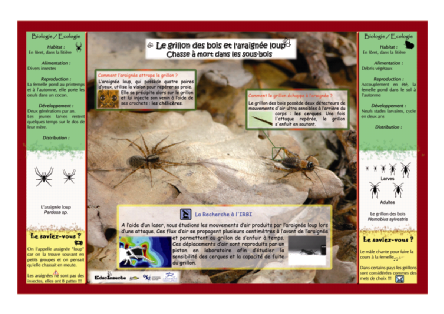
The EducInsecte project
Created and led by Wilfried Kaiser, Jonathan Voise and Jérémy Defrize.
The EducInsect project is to inform people of what kind of work is being conducted in our lab. It does so in a simple and educational way. The background objective is to teach people stories about the fascinating world of insects.
The project consists in preparing entomological boxes containing photos of the insect
in its natural environment, information on its ecology and behaviour and the true
insect, dried and pinned on. Both insects studied in our lab and insects you can
find in our region are exposed. The project is exposed during the open-

How to manage its diet on a daily basis...
The hymenopteran parasitoid Eupelmus vuilletti is our Star: it figures on the cover
of leading magazines (Ecology), it performs as well as a top-
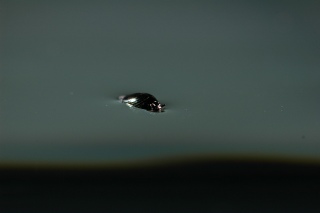
Gyrinus substriatus at rest

Institut de Recherche sur la Biologie de l'Insecte
UMR 7261 Faculté des Sciences et Techniques
Avenue Monge, Parc Grandmont
37200 TOURS (France)

Keywords :
Integrative biology
Organismal biology
Functional ecology
Quantitative ecology
Population dynamics
Community dynamics
Climate change biology
Nature inspired technology
Agroecology-Agroforestry
Biological invasions
Arthropod biology
Multitrophic interactions
Ecomechanics
Chemical ecology
Environmental genomics